Choose your game
Free Word Games for Adults: Choose Your WordQuest Mode
Explore free word games for adults with WordQuest’s untimed puzzles, Daily Word, Blitz and Expert modes. Learn how definitions and letter clues work.
Free word games for adults can mean a quiet vocabulary puzzle, a daily ritual or a fast test of recall. WordQuest brings several of those formats into one browser game. Its cheerful artwork does not determine the difficulty: longer answers, fewer guesses and a timer can change the challenge considerably. The useful question is which mode matches the way you want to think today.
What makes WordQuest a word puzzle?
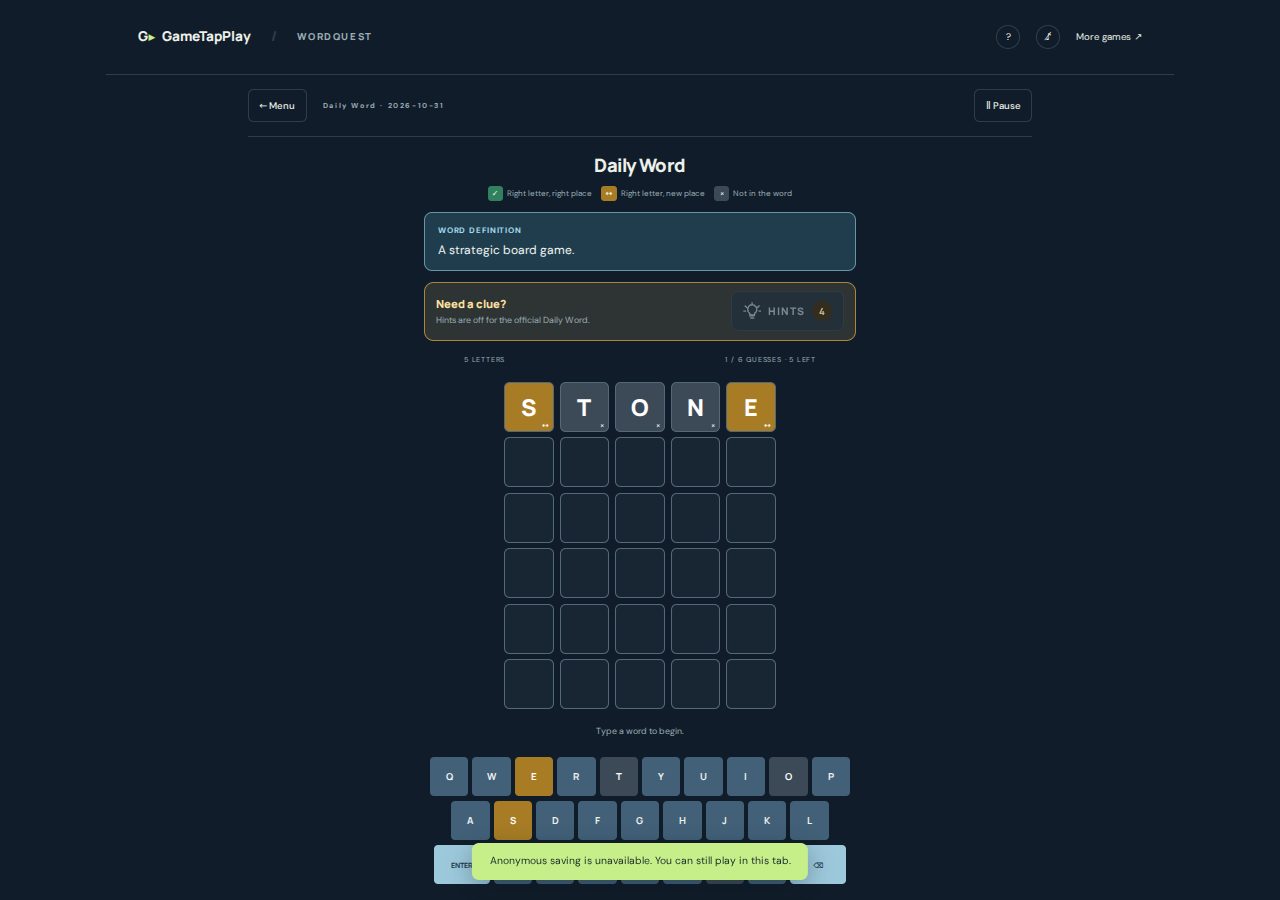
In WordQuest, you solve a hidden word using a visible definition and feedback on submitted guesses. Exact matches identify a correct letter in its correct position. Present-letter feedback tells you to move a letter elsewhere. Absent feedback rules out an occurrence, which is especially important when a guess repeats a letter.
The definition is free in every mode. That makes this a combination of vocabulary and deduction, rather than a blind search for a popular word. You can type on a physical keyboard or use the on-screen keys. Enter submits a guess and Backspace removes a letter. On a phone, check the completed row before submitting so a misplaced tap does not become an unintended answer.
For a calm session, choose Classic
Classic offers four-to-seven-letter words with six guesses and no timer. It is the clearest starting point if you want to reason aloud, compare synonyms or take time between guesses. Begin with the definition, count the required letters and consider whether the clue describes an object, action or quality.
Once feedback appears, combine it with the meaning rather than switching to letter patterns alone. Suppose you have several plausible candidates: compare them against every known position and excluded letter before choosing. A candidate that fits the latest row but contradicts an earlier one cannot be the solution. The full WordQuest strategy guide goes deeper into repeated-letter feedback and efficient guesses.
For a regular ritual, choose Daily
Daily gives players one shared five-letter answer for the local calendar date, with six guesses and no hints. It works well if you want a single defined puzzle rather than an open-ended queue. Because the date is local, it should not be confused with a challenge that changes at midnight UTC for everyone.
Make the goal a well-reasoned solve rather than preserving a perfect-looking result at any cost. Some definitions bring a word to mind immediately; others need the feedback from several guesses. A slower answer can still be satisfying. If you play on multiple devices, remember that WordQuest has an anonymous browser save rather than an account that automatically combines progress.
For speed or tighter limits, choose Blitz or Expert
Blitz gives you 60 seconds of active play. It begins with five-letter answers, adding six-letter words at 250 points and seven-letter words at 600. Consecutive wins matter, so quickly entering a weak guess can be less useful than taking a moment to check the definition. Try it after the basic feedback rules feel familiar.
Expert offers six- or seven-letter answers with only five attempts. The pressure comes from fewer opportunities, rather than simply copying Blitz’s clock. Choose it when you want to evaluate information carefully. Neither mode needs to replace Classic: moving back to an untimed puzzle is a reasonable choice when you want language play without a performance target.
For a longer project, try Adventure
Adventure contains 36 levels across six worlds. Solving in one or two guesses earns three stars, three or four guesses earns two, and five or six earns one. Total stars open later levels, so revisiting an earlier puzzle for a better rating can move you forward when the next level remains locked.
Themed challenges offer another way to approach word selection through categories. Together, these modes give different reasons to return, without needing to claim that playing guarantees better memory or measurable brain training. Enjoying a well-constructed word problem is enough reason to play.
Pick a stopping point that suits the day
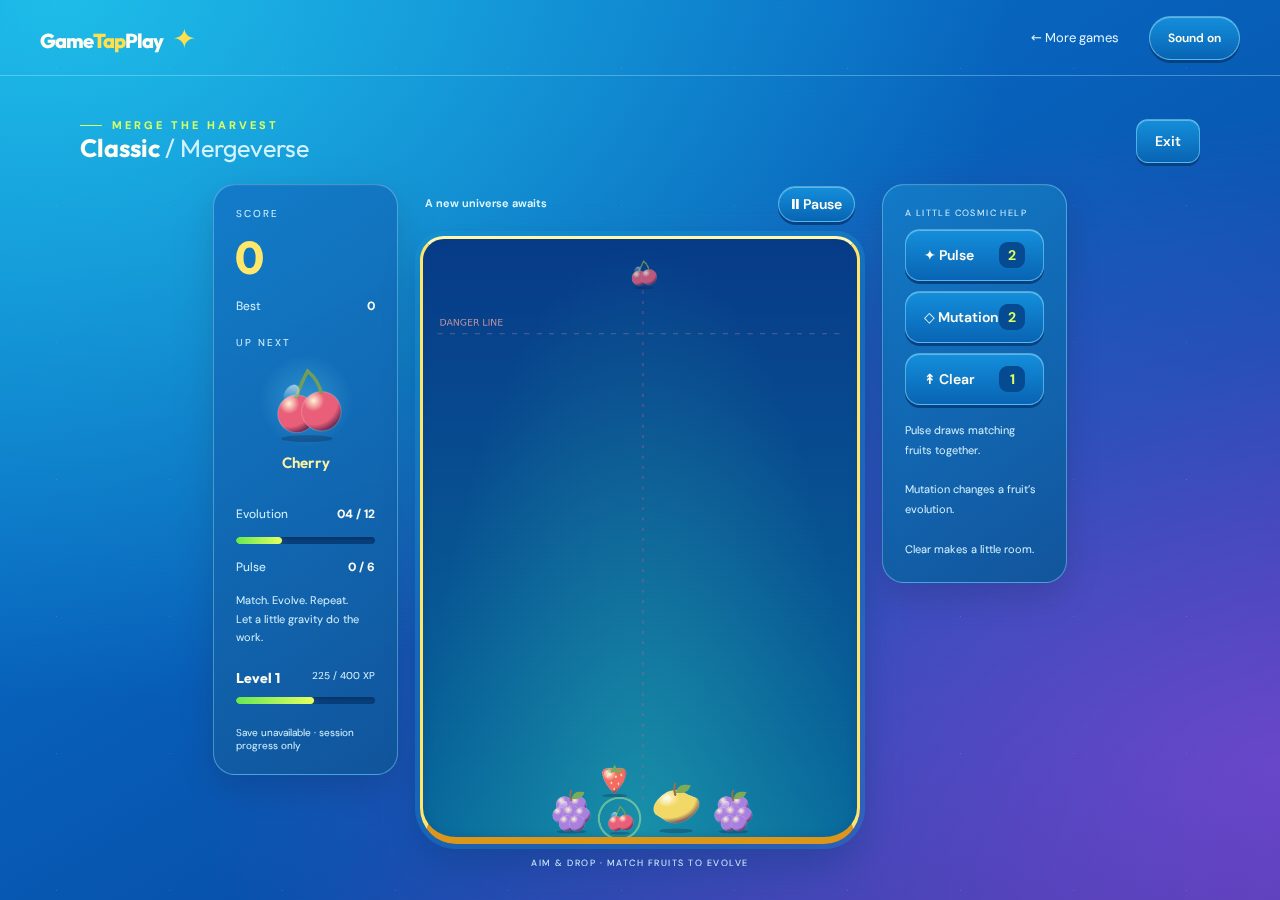
For one puzzle, choose Daily or decide in advance to finish one Classic answer. For a timed burst, choose Blitz. For a continuing goal, return to Adventure. Watch the save-status message before closing, especially after earning progress. If you want a nonverbal alternative, Mergeverse uses spatial planning, and the puzzle comparison explains what changes when letters give way to fruit physics.