The better-play notebook
10 Tips to Improve Your Skills in Online Arcade Games
Build repeatable habits for movement, accuracy, resource management and useful practice.
Improving at an arcade game is easier when you can name what went wrong. A collision might come from a late decision, an unnecessary lane change or spending a defensive ability too soon. Each has a different solution. These ten tips turn a vague aim to “play better” into habits you can practise in short browser sessions.
1. Learn the actual scoring rules
Before chasing a record, find out what produces points and what ends a run. Survival, accuracy and collectibles often interact. A route that earns a small pickup but loses the whole attempt is rarely a useful trade.
In Hard Target, unused bullets award a stage-clear bonus. That makes a controlled, accurate finish valuable even when you could fire more shots. In X-BIKER, fuel exhaustion ends a ride, so a high near-miss combo cannot replace petrol. Read the specific guide before importing rules from another game.
2. Make basic controls automatic
Practise steering, jumping or firing without adding a scoring goal. You want the input to feel predictable enough that you can watch the playfield instead of your fingers. Start at normal speed before introducing boosts or difficult starting points.
If two control methods exist, compare them in similar conditions. School Run supports swipes and on-screen buttons on mobile. Choose the one that gives you fewer accidental actions, rather than the one that merely feels faster on a single attempt.
3. Look ahead of the immediate danger
Watching only your character makes decisions arrive late. Move your attention toward the next obstacle, traffic gap or projectile path, while keeping your position in peripheral view. The aim is to notice a problem before it requires an emergency correction.
In a lane game, identify the open route through the next row. In a shooter, look for where incoming paths leave space. Avoid staring at the score during the part of the run that most needs your attention.
4. Reduce unnecessary actions
More inputs do not automatically mean more control. Every extra change of direction creates another opportunity to overshoot or enter a new hazard. Try completing a familiar section with fewer deliberate actions.
In School Run, a safe lane plus one well-timed jump can be more reliable than weaving toward every star. In Cosmic Strike, a short adjustment may avoid a projectile while keeping an exit open on both sides. Review whether each movement had a clear purpose.
5. Keep a resource in reserve
A defensive ability is most useful when it answers a specific threat. Check what it does, what it costs and when it becomes available again. Pressing every available button together can leave you without an option for the next pattern.
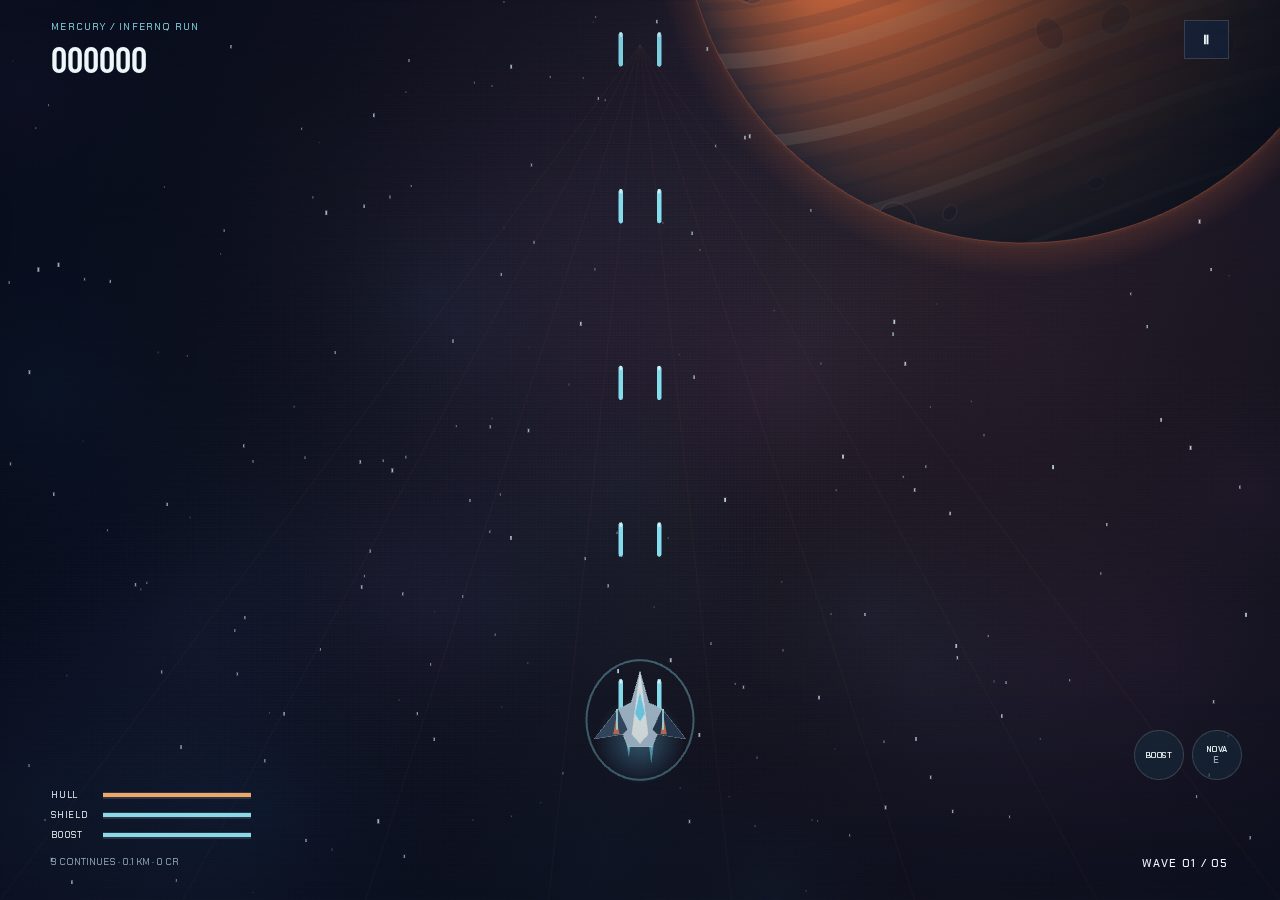
Cosmic Strike's boost grants brief immunity, while nova clears enemy projectiles. Decide which one solves the present problem and whether you can retain the other. X-BIKER's nitro is a speed tool, so use it after finding space rather than assuming it creates safety.
6. Separate accuracy practice from speed practice
If you rush every attempt, you may rehearse mistakes faster. First establish a version of the action that succeeds consistently. Then reduce the delay between recognising the situation and performing the same controlled action.
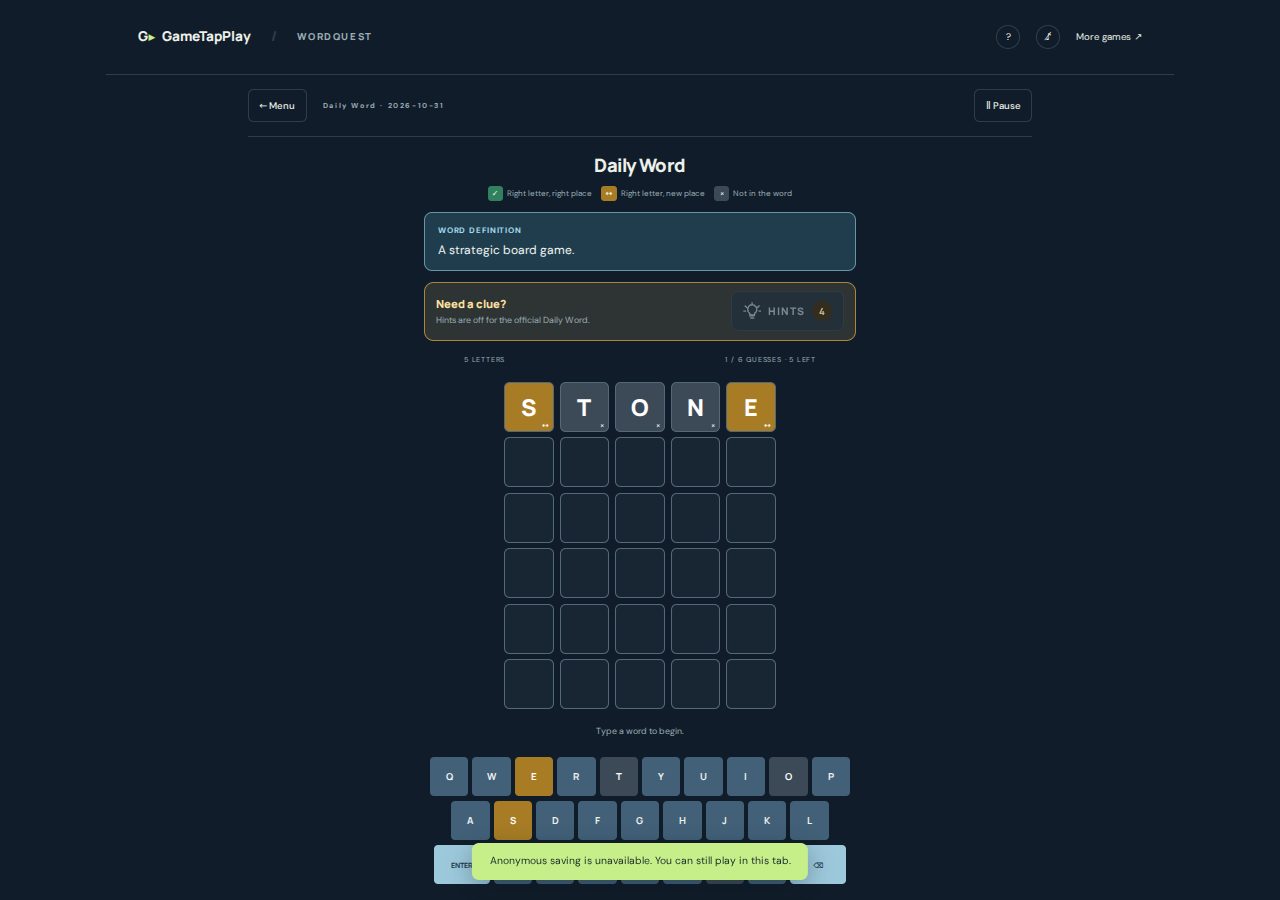
Hard Target offers a clear example: learn dependable torso hits before demanding a headshot chain. In WordQuest Blitz, learn to eliminate impossible candidates before trying to type each guess more quickly. Speed becomes useful when it follows a sound decision.
7. Review one mistake after each run
Choose the first important error rather than reliving every later consequence. Ask what you saw, what you decided and whether the input matched that decision. This separates perception problems from control problems.
If you saw an obstacle early but pressed the wrong key, practise the control. If you never noticed the obstacle, work on where you look. If you noticed it but had no exit, examine an earlier movement that placed you in that position.
8. Use checkpoints and replays purposefully
Repeating the same challenge helps only if you change something you can evaluate. Use a checkpoint to practise the section that causes trouble, then compare attempts with a consistent starting point.
School Run's checkpoint starts begin new runs with zero score, so compare records from matching starts. In Mergeverse Journey, replaying a level can improve stars, but identify whether your goal is fewer drops, a better chain or safer use of an ability before retrying.
9. Keep practice conditions reasonably consistent
Changing device, controls, screen orientation and sound settings every attempt makes comparison difficult. Establish a comfortable setup, then vary one factor when you have a reason to test it.
You do not need expensive equipment to learn from consistent conditions. A stable browser, reachable pause button and clear view of the playfield are a useful starting point. Pause and adjust if your hands become uncomfortable; discomfort is not a productive training method.
10. Judge progress across several attempts
A single record may include unusually favourable situations. Look instead for fewer repeated mistakes, a more reliable survival distance or better accuracy across several rounds. Those improvements are easier to reproduce than one exceptional score.
End a session with a specific next step: “look beyond the nearest car” is more useful than “try harder.” Open a game you enjoy, choose one of these tips and practise it for a few attempts. Once it becomes dependable, add the next habit.