The better-play notebook
Why Browser Games Still Earn a Place in Your Day
Explore the practical appeal of instant access, short sessions and varied browser games, alongside their real limits.
Browser games have a practical appeal that survives changes in gaming hardware: you can open a link, understand a small set of rules and start playing. For someone who wants a word puzzle during a break or a quick arcade attempt, that convenience matters. It is more useful to explain those strengths than to claim a worldwide popularity surge without evidence.
A short route from curiosity to play
An interesting game link can become a playable page without a separate store visit or a large installation. That reduces the effort required to try something unfamiliar. If you enjoy the first attempt, you can keep playing; if the style does not suit you, choosing another game takes little commitment.
This does not mean browser games download nothing. Scripts, images, audio or other assets still arrive over the connection, and a first load can take time. The difference is in the experience of opening the game directly, with the browser handling those resources as part of the page.
Small sessions can still contain real decisions
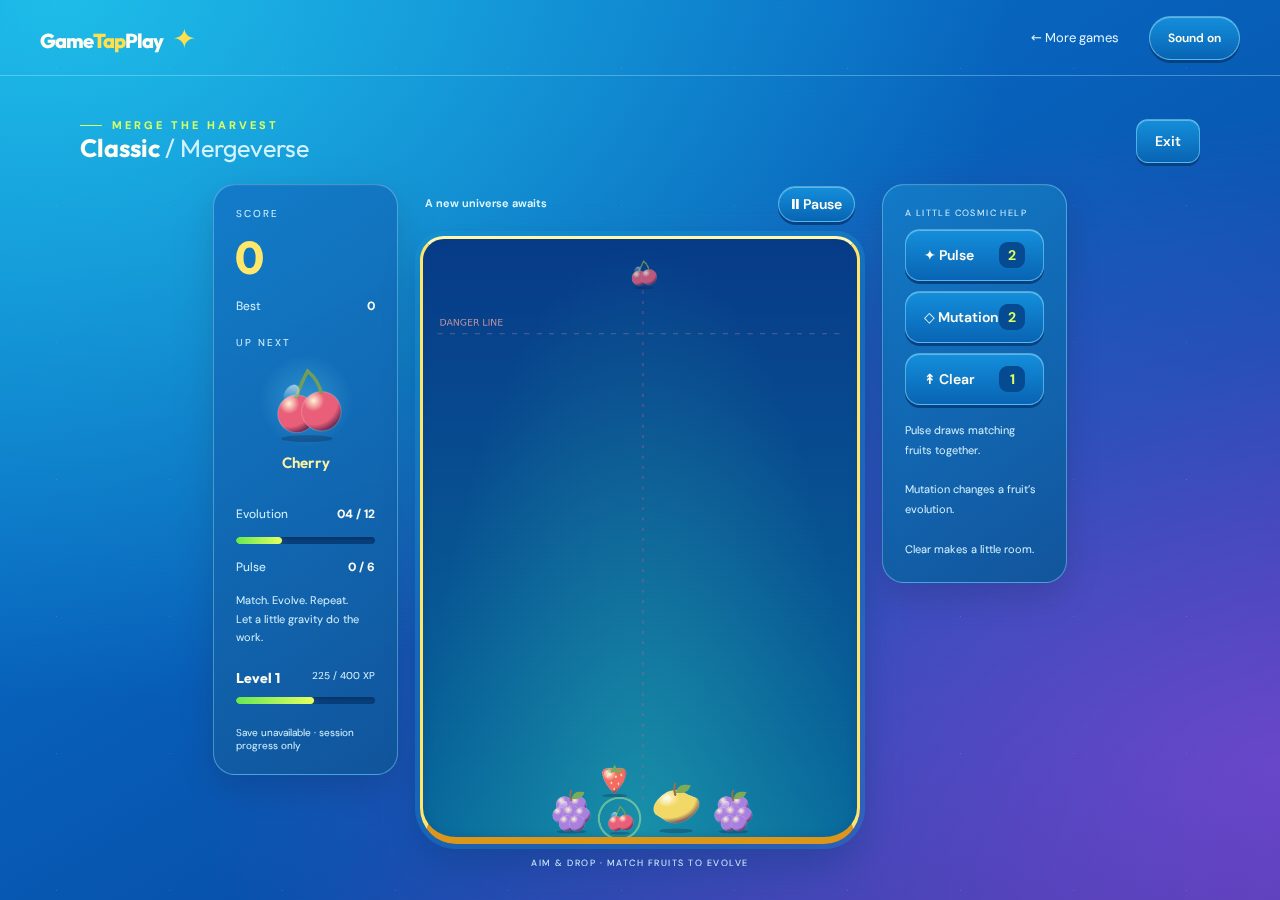
A game does not need a long campaign to offer meaningful play. A single WordQuest puzzle asks you to connect meaning with letter evidence. A Mergeverse drop asks you to judge space and the next available match. Those decisions work in short sessions because the objective is easy to revisit.
Arcade games create a different rhythm: begin, attempt a challenge, see a result and decide whether to try again. That clear loop can fit a break, provided you choose a stopping point rather than letting every result automatically become another attempt. Convenience is most useful when it works with your available time.
Modern browsers support varied presentation
Browser games are not limited to text and flat buttons. Canvas drawing, browser audio and WebGL make different styles possible. On GameTapPlay, Cosmic Strike uses a canvas playfield, while School Run and X-BIKER render 3D scenes. WordQuest keeps attention on definitions and tiles instead of demanding a complex scene.
More visual complexity is not automatically better. A readable board can serve a puzzle more effectively than elaborate effects, and modest presentation can make a game comfortable on more devices. The important question is whether the visuals communicate the choices the player needs to make.
Links make discovery and explanation easier
A clean game URL can be shared directly, and a useful guide can explain the controls before someone opens the playfield. That combination helps when a game has several modes or an unfamiliar scoring system. Players can arrive with a specific question rather than learning everything through trial and error.
Guides also give context to a catalogue. Someone who enjoys WordQuest's untimed reasoning may want another planning game, while a player who likes Cosmic Strike's movement may prefer X-BIKER's traffic decisions. Related links make those connections easier to explore without claiming the games are interchangeable.
Access across devices has real value
A browser is already present on many phones, tablets and computers. A well-designed page can adapt its layout and offer touch alongside keyboard or pointer input. That gives players more ways to try a game without requiring identical hardware.
However, opening the same URL is not the same as getting the same performance or saved progress. A small phone can make a tiny scoring zone harder to tap. A complex 3D scene can strain some devices. Anonymous browser saves may remain separate across browsers. Good device support includes clear controls and honest save explanations, not just a page that technically opens.
Lower commitment encourages experimentation
When trying a game is simple, it becomes easier to explore outside your usual genre. A shooter player might discover that a word puzzle offers a satisfying slower session. A puzzle player might enjoy a runner once the jump and slide are explained clearly.
The useful quality is a low barrier to understanding, not a lack of depth. Mergeverse's simple drop action still supports limited-move Journey objectives. Cosmic Strike's steering and firing lead into wave checkpoints and guardian encounters. A clear starting action can coexist with decisions that reward practice.
Free access still deserves clear expectations
Free browser gaming can involve advertising, optional purchases or different forms of tracking on different websites. Those choices affect the experience, so visitors benefit from straightforward explanations and usable privacy controls. “Free” should not substitute for telling people how a site works.
On GameTapPlay, no account is required to start the existing games. The privacy policy explains anonymous saves, browser storage and optional cookie choices. Hard Target is a separately hosted game embedded within its page, which is a meaningful distinction for storage and availability. Knowing these details helps players decide how to use the site.
Useful content makes a game site worth revisiting
A catalogue becomes more helpful when it answers practical questions: which controls work on mobile, what a score means, how a checkpoint behaves and whether refreshing keeps a run. Substantial guides can provide those answers without covering the playable area or interrupting a round.
That is the case for returning to browser games: accessible starts, understandable rules and enough variety to match your time. Browse GameTapPlay's games or begin with the browser-gaming introduction, then choose a guide for the game that interests you. The strongest recommendation is a session that feels worthwhile, not a claim that every browser game must suit everyone.