The better-play notebook
How to Improve Reaction Time and Gaming Performance
Practise earlier recognition, simpler decisions and controlled inputs without relying on quick-fix claims.
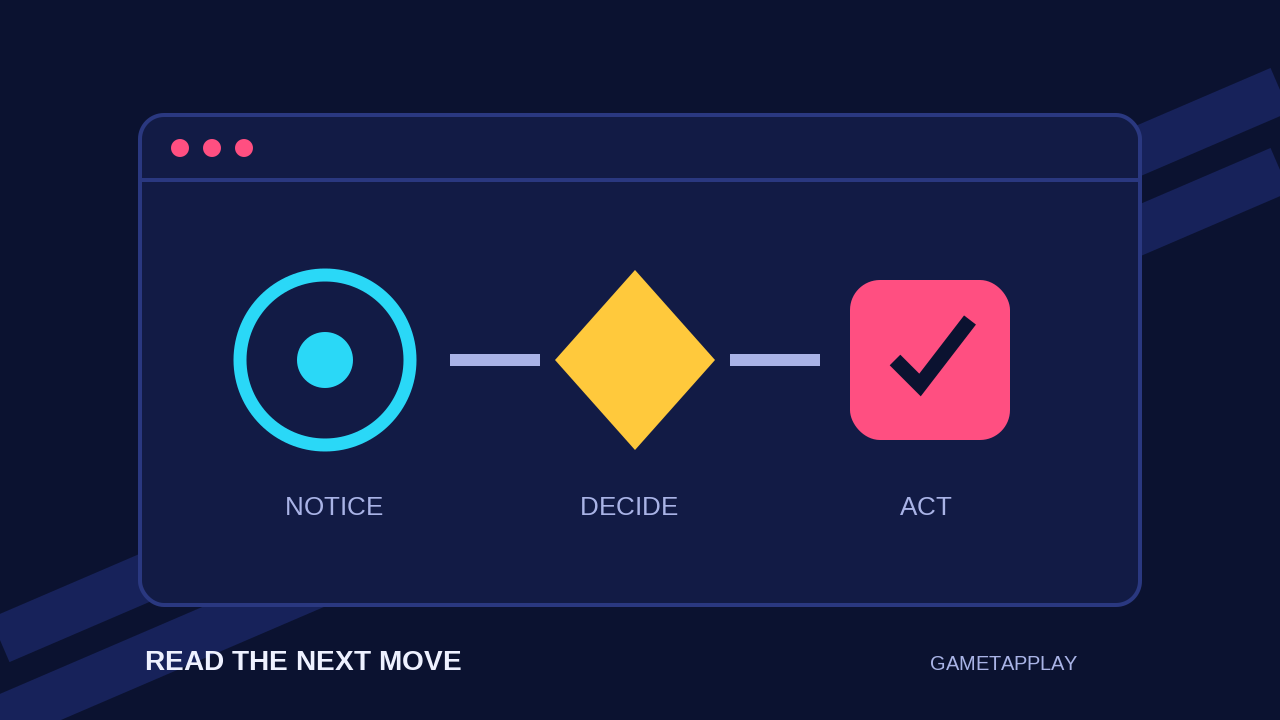
When a game feels too fast, raw reaction speed is only one possible explanation. You may be looking in the wrong place, choosing between too many actions or moving into a position with no safe exit. Improving the whole sequence—notice, decide, act—often makes play feel calmer without requiring frantic inputs. The useful goal is more reliable performance, not a promise of instant reflexes.
Separate noticing from responding
Think about the last obstacle you failed to avoid. Did you see it early but press late, or did you only notice it when it reached you? Those situations feel similar during play, but they suggest different practice.
If noticing was the problem, change where you look. In School Run, watch the approaching row rather than the runner's feet. In X-BIKER, check traffic beyond the nearest vehicle. If you saw the threat in time but selected the wrong input, slow down and practise the control mapping before trying to improve speed.
Reduce the number of decisions
A clear rule can be faster to use than improvising every response. In a lane runner, first find the open route. Only then decide whether a pickup is safely reachable. That order avoids debating a reward while the obstacle closes in.
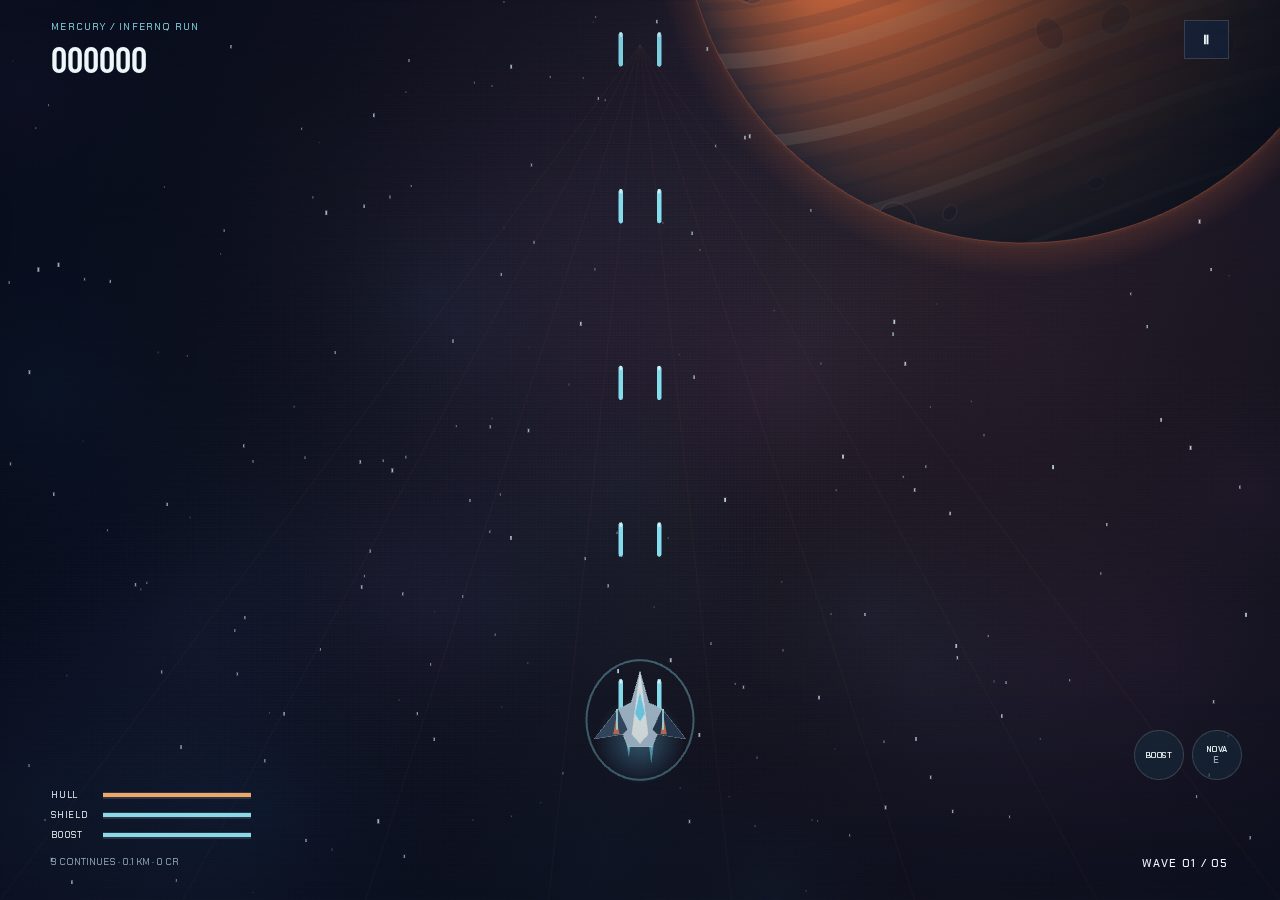
Create a simple priority for the game you are playing. In Cosmic Strike, a useful order is to preserve a movement route, respond to an immediate projectile threat and collect salvage when safe. These are practice priorities, not a guarantee that one fixed sequence solves every encounter. Revise them when experience shows a better approach.
Learn cues before increasing speed
Games become easier to read when you recognise their visual language. A warning area, obstacle shape or target movement gives information before an impact happens. Spend a few attempts identifying those cues rather than trying to set a record.
Describe the cue in plain words after an error: “the high beam needed a slide” or “the lane beyond the pickup was blocked.” Naming it makes the next practice goal concrete. Avoid labelling every failure “slow reactions,” which hides useful differences between late recognition and poor positioning.
Practise short, accurate responses
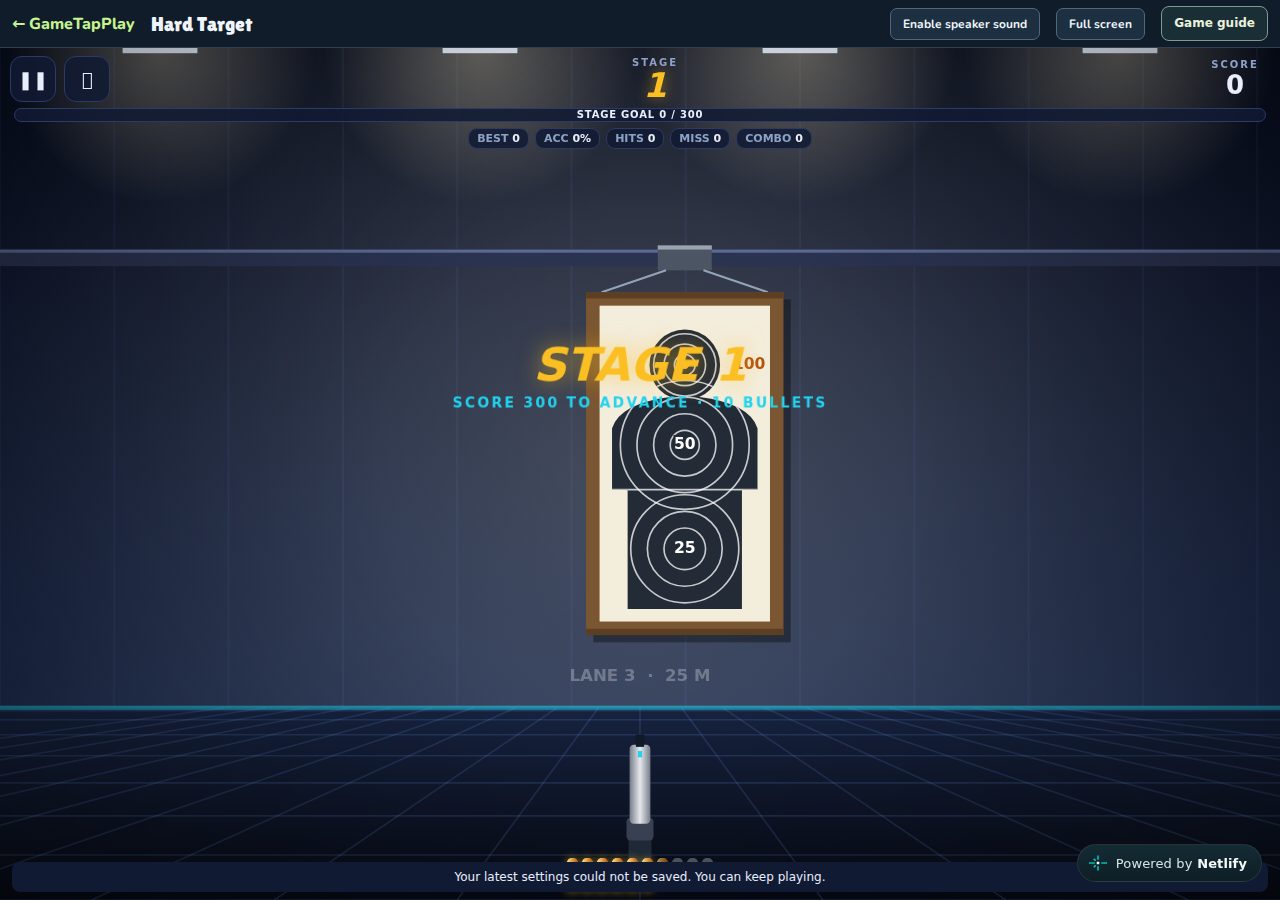
Choose one action and repeat it in an appropriate game situation. For aiming, begin with a scoring area you can hit reliably in Hard Target. For movement, practise a clean lane change without adding another correction. For a word game, practise reading all feedback before typing the next candidate.
Once accuracy becomes stable, reduce unnecessary delay. Do not demand speed before you know what a correct action feels like. Repeating a rushed mistake can make that mistake more familiar without improving the skill you intended to practise.
Use anticipation without guessing blindly
Anticipation means preparing for plausible events based on what is visible. It does not mean committing early to a hazard you have not checked. Staying near an available exit is useful; swerving because you assume every row repeats the last one is less dependable.
In Cosmic Strike, leave room to move when a new pattern starts. In X-BIKER, check the road before engaging nitro. In Hard Target, observe the current motion instead of firing at a remembered location. These habits give the next action a better starting position, reducing how much emergency correction you need.
Remove avoidable setup friction
Make sure essential controls are reachable and the screen is readable. A key that requires you to move your whole hand adds a different difficulty from recognising a threat. On mobile, check whether a finger blocks the part of the playfield that gives early warning.
If animation is uneven, close unrelated busy tabs and compare performance with a consistent setup. Use available effect settings where they help. Avoid assuming every delay comes from your reflexes: frame pacing, input comfort and visual clutter can all affect how a game feels. Change one condition at a time so the comparison means something.
Treat fatigue as information
Attention varies over a session. If you begin missing obvious cues or repeating the same correction, take a break instead of turning practice into increasingly hurried retries. Use the game's pause or stop at a results screen so returning is straightforward.
Normal rest and comfortable play conditions support concentration, but no routine guarantees a particular reaction-time improvement. Be cautious about claims that a supplement, expensive accessory or single exercise produces dramatic results. Judge changes by how reliably you play the actual game over several sessions.
Build a simple practice session
Start with a familiar section and one objective, such as spotting the next safe lane early. Play a few attempts, then identify the first important mistake in each. Change one habit: look farther ahead, make a smaller movement or reserve a defensive action.
Finish with a brief check of whether the error happened less often. A personal best is welcome, but it is not the only evidence. More consistent accuracy or fewer panic inputs can show that the new habit is useful even before it produces a record.
Apply the process to a game you enjoy
Choose School Run for reading obstacle rows, Hard Target for deliberate aim or Cosmic Strike for movement and defensive timing. Use the ten arcade-skills tips to broaden practice once the first habit feels reliable. Better performance starts by understanding the decision you need to improve, then rehearsing it under manageable conditions.